Polecany post

ABUJA LOCKDOWN: A LIVING HELL

We have  little or no  electricity suppl y here, no running water in the houses; w e don't have money to buy food any more... Read more ...

środa, 21 października 2020

An SS-man Edward Lubusch who escaped from Auschwitz

Entangled in a love story of a Pole and a Jewish girl


Edward Lubush was born in 1922 in Polish Bielsko. His father was a German and his mother was a Pole, so Edward was speaking two languages fluently. Despite having a Polish mother he identified himself with his father’s nation. His family was living in Polish-German community, so in the earlier years of his childhood the boy had friends of both citizenships. At heart however he was a German – he thought like a German and wanted to live like a German and that decision had a great impact on his future career. His parents supported that belief, the more that a political situation between Germany and Poland was getting gradually hectic just before the Second World War and being German was simply much safer than being a Polish, but also because being a citizen of the nation which country regained their independence recently (1918), was just less comfortable.


Edward Lubusch (1822 – 1979)
Edward Lubusch (1822 – 1979).


Poland, one of the oldest European Christian countries, founded in 10th century and known as one of the few largest empires in Europe was completely defeated by Russia and Germany in 17th century and went under Russian-German-Austrian occupation for 123 years which resulted in erasing the country out of the world’s map. Despite many national uprisings, Poland managed to get their independence only after the end of the First World War. So, in the interwar period (so called interbellum) there was a deep economic and political crisis, as the country wasn’t strong enough yet. In the thirties of the 20th century Hitler’s National Socialistic ideology started to rise and the tempers between Aryan race (which German identified themselves as people with blonde hair and blue eyes and the ancient Nordic origins) and other nationalities started getting gradually hectic. In his manifest “Mein Kampf” (“My Fight”) Hitler called Aryans as “the master race” while Poles and other people of Slavic origin were put in the lower position in his racial ideology to be allowed to live only in order to do the slavery work. The lowest position was destined for Jews, who were supposed to all be killed like rats. In the last years of the thirties, Hitler’s ideology and the German youth organisations (like Hitlerjugend) were disseminated throughout Germany which resulted in an immediate worsening relationship between Germans and Polish living together in the same community in many Polish towns on the border with Germany.


Adolf Hitler, “Mein Kampf”, 1925
Adolf Hitler, Mein Kampf, 1925.


Lubusch was never proud of his Polish origins and definitely took the side of his father’s nation considering himself as a German. According to Franciszek Karczmarczyk, Lubusch classmate; Edward, as a young boy protested aloud against the obligation of speaking Polish language mandatory in the Polish school he attended. This resulted in expelling him from the school in 1939 but never destroyed his love for German language and culture. On the contrary, he started to consider himself as a German even more, so once the Second World War broke out he voluntarily joined the German SS Force. Later he volunteered for work in Auschwitz. In 1942 he got married to a German girl with Polish origins and the next year he became a father – his son was born in 1943. They lived in Wadowice, not very far from the Nazi concentration camp Auschwitz.


Edward’s and Marta’s Lubusch wedding photo, 1942.


Working in Auschwitz wasn’t Lubusch’s idea but his mother’s. She wanted her son to be safe and stay away from the hell of the war front. His elder brother died during the battle so Edward accepted his mother’s proposal and applied to Auschwitz. As he said later, he wasn’t entirely aware of what the Nazi concentration camps really were and had no idea about the ferocity of soldiers who worked there. Officially at the beginning, Auschwitz was a camp for political prisoners but over time it became the Nazi death factory where averagely 1.3 million people died, 90% of whom were Jews.


Auschwitz, 1940 – 1945.


The historian of the Memorial and Museum Auschwitz-Birkenau, Phd. Adam Cyra, said that among 8 thousand of SS-men, Edward Lubusch was perceived by prisoners as a good man, the only one SS-man, who was indulgent towards people. He was the only one according to current research, who was able to keep his humanity in times of terror when human lives had no value, when people were killed like rats only because of their origin. Despite his work in the death factory he tried not to attend any brutality which was typical behaviour of an average Auschwitz SS-man. It was so easy for an SS-man to kill a prisoner without any reason, moreover, according to the camp’s law, they were rewarded with three days of a rest leave for killing those ones who were going to escape from the camp if only the intention of illegally escaping from the camp was adequately proven. This law allowed them to play one of the most vicious games with the prisoners which now might seem like a scene from horror movies: An SS-man orders a convict to give him his hat and then throw it away far beyond the camp’s boundary line, the crossing of which was equivalent with the intention of escape and thereby getting a death sentence. Then he asks a prisoner to fetch the hat. If he does, an SS-man shoots him immediately and reports to Gestapo (the German Police) that he killed a prisoner escaping from the camp and officially is awarded with three days of the rest leave. If a prisoner refuses to fetch the hat, an SS-man shoots him for failure to carry out his order, which was an ordinary punishment for rebelling convicts, but he couldn’t get any special award for killing him this way. Such camp laws resulted in an increase of cruelty among the SS-men who started simply to kill prisoners in many ways only for fun or personal benefit.


A scene from a movie: The Schindler’s List, 1993.


Prisoners who talked about life in Auschwitz confirmed that Edward Lubusch didn’t play any cruel games with prisoners, on the contrary, they admitted he was rather gentle and considerate. However his serenity was his weakness, the commanders didn’t like that feature, so Lubusch was punished many times officially because of his inadequate behaviour. At one time he was sent to the SS convict settlement where he was supposed to learn how to treat the prisoners heavy-handedly, how to be a real SS-man, not a weak coward who had no courage enough to hit or kick a prisoner. The result of Lubusch’s punishment was actually totally opposite of what they expected. He did not only object to abuse the prisoners, but paradoxically his consideration increased significantly. He was eager rather to show his sympathy to the prisoners instead of treating them brutally in accordance with the Auschwitz regulations which not only required the SS-men to ruthlessly enforce camp’s law but also allowed various forms of cruelty such as beating, humiliating, sexual abuse, denunciation, rejecting daily food portions or even killing in anger. He learnt in time however he shouldn’t openly show his sympathy unless he wanted to be punished again. He quickly understood that by sympathising with the prisoners he simply put himself in jeopardy from the SS commanders and Gestapo, so he started to behave more carefully and never showed again his affection for the convicts.

uschwitz women sorted through shoes from the killed Hungarian Jews, 1944.
Auschwitz women sorted through shoes from the killed Hungarian Jews, 1944.


According to Stanisław Trynka who was held in Auschwitz, Edward Lubusch might have saved many people with his attitude. In 1942 he ran the locksmith’s shop in Auschwitz where several prisoners worked. Since he could decide for himself who to recruit, he rather chose those ones who had no strength for work and needed to be regenerated. Of course he required them to work hard but never overstated his expectations and looked after them, making sure his workers had all their daily meals and medicines. But according to Kazimierz Wandowski, a former Auschwitz prisoner, Lubusch didn’t do it selflessly, but in exchange for a considerable amount of soap which he collected for free from the soap store. At the beginning he was beating prisoners, as all the SS-men did, but over time his behaviour changed. It was nothing strange when he sat among the prisoners, joking and laughing – as long as he hadn’t been reported to the SS camp headquarters. Some of the prisoners became his friends. The convicts returned the favour many times. For example, as was said by the former prisoner, Artur Krzetuski, they efficiently concealed the fact that Lubusch shouted the Polish national anthem “Mazurek Dąbrowskiego” which begins with the words “Poland hasn’t died yet while we are alive”. Another prisoner; Kazimierz Smoleń and later the general director of the Memorial and Museum Auschwitz-Birkenau, recalled the day when drunk Lubusch started shooting Hitler's portrait. His subordinates managed to overpower him and later they masked the holes in the portrait so nobody could realise what had really happened. The next morning the portrait looked brand-new… According to other witnesses who survived Auschwitz, SS-man Lubusch told Polish prisoners he was deadly ashamed to be a German after seeing what was happening in Auschwitz.

The SS-man Edward Lubusch in his locksmith’s shop in Auschwitz, 1943.


One of the most famous acts of Lubusch’s help to prisoners was his involvement in the escape from Auschwitz for the couple of young lovers: a Polish boy Edek Galiński and a Jewish girl Mala Zimetbaum who met in Auschwitz in the last months of 1943.

Mala was a prisoner of Auschwitz but, as a well educated Polish-Belgian Jewish girl who knew few languages, she worked in one office and translated documents into German, French, Italian, Polish, Dutch and Russian. She was very much loved by the female prisoners, showed them often a lot of sympathy and helped whenever she had a chance. Their fellow inmates remembered her as a person, who helped them write letters to their families to say good bye – when they realized that they would not survive the hell of the Nazi camp.

Mala Zimetbaum, Auschwitz, 1943.


Edek Galiński was a Polish intellectualist, who was arrested by German soldiers in 1940 in the action “AB” the aim of which was to arrest most of Polish scientists, doctors, professors and other intellectualists and send them to the Nazi concentration camps to death. It was obvious if the leaders were dead, the rest of the nation would come into line with Germans. He was working in the Lubusch locksmith’s shop where they both met and became true friends.

Edek Galiński, Auschwitz, 1940
Edek Galiński, Auschwitz, 1940.


Edek and Mala fell in love in Auschwitz, they enjoyed each moment they could spend together. It was like looking for the second best of normality in hell… They managed to find moments for themselves for talking, walking, dreaming dreams about their future, all this in the shadow of cremation ovens which were working all day and night, burning the bodies of prisoners killed there. All that death, pain and sorrow of thousand people seemed to be not more important than their love which was stronger than any fear.

Personal belongings of prisoners sent to the gas chamber, Auschwitz.


Many years after liberating Auschwitz, Wiesław Kielar, one of Edek’s true friends who survived the hell of the Nazi concentration camp, wrote a book “Anus Mundi” which was about Auschwitz and the two lovers. Most of the details of their love story written in this article are taken from there, but the book was classified as non-fiction, and as such one can be used as a historical source. After publicizing the book he revealed even more secrets from the love story, such as the fact that Edek and Mala not only fell in love with each other but were also able to have their sex life in the camp. It wasn't easy at all in those conditions, where prisoners slept in large barracks, men and women put separately in different buildings, on average 1000 people in one barrack, three persons in one bed under only one blanket. The camp was overcrowded, new transports of convicts arrived every day and everyone had the impression that there were more and more prisoners in the barracks even if more than a thousand people were killed every day. The place where they made love was absolutely unexpected and no one would believe in that unless Wiesław Kielar revealed this once during an interview. It was an X-ray bed in the experimental block no. 10 in Auschwitz, where doctor Mengele and Schumann run medical experiments on men and women trying to heal some diseases or wounds by irradiation with x-ray and also checking how many times a person can have x-ray until their body cells start to die and how quickly the x-ray effects progress in human body. That bed used to kill people, to sterilise prisoners, but it was also the place of carnal love between Edek and Mala.

A kindergarten in Auschwitz, little prisoners in striped uniforms.


Joseph Mengele is called today as “The Angel of Death.’’ Hardly anyone could survive after they were accepted into Doctor Mengele experimental ward. He was an SS-man and a doctor of medicine with a PhD degree. He looked like a movie lover but the bestiality of his actions had no limit. He conducted pseudo-medical experiments on children and adults. Officially his research focused on multiple pregnancies, cancer, genetic inheritance and racial purity. He also ordered the kindergarten in Auschwitz where all the children were admitted. He was always very nice and smiling so children liked him and called him a good uncle. Later it turned out he used these children in his medical experiments. One of his aims was to learn, if there was any body connection between twins, so he admitted about 1500 twins to his ward. One of Mengele’s most absurd experiments was his attempt to turn the twins into the Siamese twins by fusing their internal organs, veins, or particular parts of bodies. As a result of that practice, no fewer than 100 twins survived his experiments but most of them remained disabled and were taken to the gas chamber to die. Hardly any of them survived Auschwitz. After the liberation of Auschwitz Mengele was imprisoned but managed to escape. He was never captured and died in 1979 in Switzerland as Wolfgang Gerhard. His identity was confirmed by DNA tests in 1992.

Children from Mengele’s experimental block no.10, Auschwitz.


Galiński was a friend of the SS-man… he took a risk and initiated Lubusch in the escape plan and the SS-man agreed to help the lovers at the end. He gave Galiński his own SS uniform with all the military decorations and a pistol with three rounds. The young boy, disguised as an SS-man took the girl out of the Auschwitz camp on 24th June, 1944. After passing the wire fence of Auschwitz, Mala took off her striped uniform that all the Auschwitz prisoners had to wear, under which he wore an ordinary dress. Everyone who met them could only think that they were a couple in love: a German SS-man and a Polish girl. They were running 13 days. They dreamt of starting a family and living a life somewhere off the beaten track. They began to believe that their dreams would come true and fortune would smile at them. And then they met a German SS patrol. It was 7th July 1944. German soldiers immediately recognised Mala’s Jewish facial features and when they took them to a search they saw the numbers tattooed on their arms: the identification of inmates in German concentration camps. Thus it became clear the couple were in fact the fugitive prisoners of Auschwitz. As a result Edek and Mala were sent back to Auschwitz and put in the death cells for the penalty of escape. Before they heard their death sentences they were tortured to reveal the names of people who helped them to escape. The most important question asked by Gestapo was who gave them the SS uniform and weapon. Despite the brutality of the perpetrators, both Edek and Mala said nothing about the SS-man Lubusch and his involvement in that case. When the sun went down and the whole camp plunged into the night, Edek sang loudly or whistled to let Mala know that he was still alive.

A gas chamber in Auschwitz, prisoners went there naked as they were told it was a shower place.


Their love ended just like in Shakespeare's drama. They were used as a terrifying example of what would happen if anyone wanted to escape from the camp. Edek was sentenced to death by hanging. He climbed onto a stool, put his head into a noose, and kicked the stool even before the death sentence reading was completed. It was totally against the Germans bureaucracy so an SS-man jumped quickly to save Edek’s life and put his feet on the stool again. Before he died he exclaimed: “Long Live Pol…”. It was supposed to be “Long Live Poland'' but he was hanged before he could finish.

The cremation buildings in Auschwitz.


Mala died on the same day, but her execution was far more dramatic. She was sentenced to death by being burnt alive in a cremation incinerator. It was unacceptable, so Mala tried to commit suicide by cutting her veins with a tiny razor blade. Perhaps she would have done so but she was caught by SS-Aufseherinnen, the female SS prison guard, who took the razor away and defeated Mala’s intention. Before she was killed the nurses strapped her wounds very slowly believing that she would bleed out before the death sentence was carried out. She was still alive when they transported her in a wheelbarrow and put her into the cremation incinerator. Nobody really knows how it ended. Some people said that one SS-man shot her to end her anguish, but others claimed that she died burnt alive inside. Edek and Mala died tragically in Auschwitz on 22nd August 1944 but there is still a souvenir that remains and is survived on them. When they were dating in Auschwitz each of them cut the coil of their own hair, which later they exchanged with each other and kept them under their striped uniforms locating them right on their hearts as a promise of future love and marriage. These coils are now covered with scraps of paper and placed on exhibition in the Memorial and Museum Auschwitz-Birkenau.

Cremation incinerators, Auschwitz.


Immediately after the lovers died, Lubusch decided to desert Auschwitz. He was truly aware that any help he had shown the prisoners could be revealed at any moment. It would be enough to torture one of the employers of his locksmith to induce him to reveal his name as a person who enables the lovers to escape. As he decided, one day he just left his home on his motorcycle but he never made it to the Auschwitz camp. His sympathy for Poles made him ultimately change his mind, so he turned away from the German nation and Hitler’s ideology and took the side of the Polish nation, those days still occupied by Germans during the Second World War. As Daria Czarnecka, a volunteer from the Memorial and Museum Auschwitz-Birkenau, said, he probably got involved in the Polish AK Force and started to fight against Germans. He was valued by all his comrades in the army because he could speak German fluently and had the SS uniform which was very useful in some military actions like recapturing the Polish prisoners from German jails. He was arrested in the end of 1944 when he decided to visit his wife and child at their place of living in Wadowice. He never knew that his house was under constant Gestapo surveillance after his desertion from Auschwitz. He realised the house could be under German’s control, but he couldn’t bear the separation from his family any longer. He was transferred to the prison for SS-men in Berlin, Germany, where he was sentenced to death. However, the execution of the sentence was interrupted by a fire in the city that broke out as a result of the final fighting of the Second World War. Chaos ensued in the prison gave him actually a chance to escape, which he took immediately. It was March, 1945. During the escape, he found the corpses of a Polish soldier, so he seized his clothes, documents and his identity. That time in Berlin the SS-man Edward Lubusch died, and Bronisław Żołnierowski, reborn, returned to Poland. After he arrived in Poland he managed to find his family. They could no longer use the Lubusch name, because it was a name of an SS-man from Auschwitz, who was automatically sentenced to death as a war criminal. The truth about his real identity was revealed many years later.

Bronisław and Marta Żołnierowicz, 1955.


Edward Lubusch hid his name for 39 years and was always afraid of anyone who would denounce him to Russian communists occupying Poland after the Second World War and tell them about his duty in Auschwitz. After the end of the war, all the SS-men who worked in all the concetration camps and attended any form of genocide of Jews and Poles were sentenced to death. The Lubusch name was on this list as well, so he has no choice but to hide. He was obviously aware that the communist Polish government wouldn’t even take into account the fact that he wasn’t a real war criminal and in fact saved many prisoners from death and helped them rather than killed anyone there. His Auschwitz duty itself was like a death sentence. If he disclosed himself, he would undoubtedly be sentenced to death and his wife and son were disgraced as the family of a war criminal. He was one of the very few Germans in Auschwitz who kept his humanity working in that death factory, but his only award was a chance for living in hiding. Becoming invisible he would have a chance to make old bones surrounded by his closest family, his beloved wife and children. And he did so. Later for many years he worked as a tourist guide, happy he could use his mother tongue and communicate with German tourists visiting Poland. He died in 1984 still known as Bronisław Żołnierowicz. Even now we can read that false name on his grave, inscription on the grave label which remains there till day now.

The grave of Edward Lubusch vel Bronisław Żołnierowicz, Jelenia Góra, Poland, 2018.


Historians from Auschwitz were convinced that the SS-man Lubusch had died in Berlin until they met his granddaughter, Joanna Dołęga-Semczuk. She came to the Memorial and Museum Auschwitz-Birkenau to see the exhibitions and saw her grandparents’ wedding photo, exactly the same that stood on the piano in her family home. She remembered her grandfather as an affectionate man, who read the bedtime stories to her and took her for sledding in the winter.

There is no foreign occupation in Poland anymore, that’s why we can finally reveal the real name of Bronisław Żołnierowicz. His granddaughter, Joanna Dołęga-Semczuk, removed the cover of the false name and told loudly: “I am incredibly proud of my grandfather, Edward Lubusch ''. And we can add: an SS-man who deserted Auschwitz and who passed the exam of humanity in totally atrocious times. May God grant him eternal rest.


Bibliography:

  • Katarzyna Okoniewska, Doktor Mengele - Anioł Śmierci z Auschwitz-check-
  • Robert Jay Lifton: What made this man? Mengele. Lexis-Nexis® Academic, The New York Times, 1985-07-21. -check-
  • Rzeczpospolita, 23.01.2009 r., str. A13, [dostęp 27.09.2020]
  • Auschwitz: Doskonałe miejsce do życia, Newsweek, 24.02.2018, [dostęp 27.09.2020] -check-
  • Paweł Wodniak, Kolega szkolny esesmana z KL Auschwitz, Auschwitz Muzeum -check-
  • Anna Szafrańska, Marek Szafrański (PAP) SS-man z KL Auschwitz, który zdał egzamin z człowieczeństwa, dzieje.pl, [dostęp 27.09.2020] -check-
  • Agnieszka Jankowiak-Maik, Najtragiczniejsza historia miłosna z Auschwitz, ciekawostkihistoryczne.pl, [dostęp 27.09.2020] -check-
  • Dobry esesman z Auschwitz. Edward Lubuch pozostał człowiekiem w nieludzkich czasach. Twojahistoria.pl, [dostęp 27.09.2020] -check-
  • Bogdan Piętka, Spory wokół liczb ofiar Auschwitz, Spory o hisotrię i współczesność, [dostęp 27.09.2020] -check-
  • Wiesław Kielar, Anus Mundi, s. 372, Atut, Wrocław 2004. -check-


Written by: Cecylia Buczko
Cecylia Buczko
Cecylia Buczko


piątek, 25 września 2020

EDWARD LUBUSCH - esesman z Auschwitz

Niemiec czy Polak? 

Zbrodniarz wojenny czy przyjaciel więźniów? 

Hitlerowiec czy żołnierz Armii Krajowej?


Urodził się w 1922r w polskim Bielsku. Jego Ojciec był Niemcem, a matka Polką, więc Edward zawsze mówił płynnie dwoma językami, utożsamiał się jednak z narodem niemieckim. Rodzina mieszkała w społeczności polsko-niemieckiej, dzięki temu chłopak miał przyjaciół obu narodowości. W sercu był jednak Niemcem - z tym narodem związał się emocjonalnie i ta decyzja zaważyła na jego przyszłej karierze zawodowej. 


Edward Lubusch vel. Bronisław Żołnierowicz


Nie chwalił się swoimi polskimi korzeniami i już od dziecka stawał po stronie narodu swojego ojca. Z relacji historyków wynika, że podczas nauki szkolnej głośno protestował przeciwko obowiązkowi mówienia po polsku, za co został wyrzucony ze szkoły. Utwierdziło to jeszcze bardziej jego sympatie proniemieckie, dlatego gdy tylko wybuchła wojna, młody chłopak dobrowolnie zaciągnął się do formacji SS. Niedługo potem zgłosił się na ochotnika do służby w Auschwitz. W 1942 roku ożenił się z Niemką pochodzenia polskiego, a rok później przyszedł na świat jego syn.


Ślubna fotografia Marty i Edwarda, rok 1942


Lubusch podjął pracę w Auschwitz za namową matki, która nade wszystko pragnęła dla swojego syna bezpiecznej służby z dala od piekła walki na wojennym froncie. Starszy brat zginął walcząc na froncie, dlatego Edward przystał na propozycję i dobrowolnie zaciągnął się do służby w obozie. Nie wiedział wtedy jeszcze, czym są obozy koncentracyjne i nie zdawał sobie sprawy z bestialstwa, do jakiego tam dochodziło. 

Auschwitz


Ci którzy przeżyli piekło obozowe, wspominają go jako łagodnego człowieka, jedynego takiego esesmana wyrozumiałego dla więźniów. Potrafił zachować człowieczeństwo w absolutnie nieludzkich czasach. Mimo, że pracował w fabryce śmierci, nie uczestniczył w typowych dla strażników bestialstwach. 

Więźniowie w Auschwitz


Jego łagodność nie podobała się przełożonym, więc Lubusch był wielokrotnie karany dyscyplinarnie. Pewnego razu wysłano go nawet to obozu karnego SS, gdzie miał się nauczyć, w jaki sposób odpowiednio traktować więźniów. Skutek tego był jednak zgoła odwrotny, ponieważ Lubusch nie tylko nie zaczął się znęcać nad więźniami, ale stał się jeszcze bardziej wyrozumiały. Raczej okazywał więźniom sympatię zamiast traktować ich zgodnie z obowiązującymi regułami w Auschitz, które dopuszczały bicie, upokarzanie, wykorzystywanie seksualne, denuncjonowanie, pozbawianie porcji żywieniowych czy nawet zabijanie w przypływie złości lub zemsty. Zrozumiał jednak, że naraża się na niebezpieczeństwo ze strony przełożonych, dlatego stał się ostrożniejszy i nie afiszował się swoją sympatią dla skazanych. 

Edward Lubusch i Edek Galiński podczas pracy w warsztacie ślusarskim w Auschwitz


Swoją postawą ocalił wielu więźniów. W Auschwitz prowadził warsztat ślusarski, do którego przyjmował głównie tych, którzy potrzebowali zregenerować swoje siły. Nie wymagał od nich ciężkiej pracy, a zarazem dbał, aby jedli swoje porcje żywieniowe.  Potrafił siedzieć w kręgu więźniów i żartować z nimi, niektórzy stali się jego przyjaciółmi. Więźniowie odwdzięczali mu się na różne sposoby. Na przykład kiedyś zatuszowali fakt, że w przypływie upojenia alkoholowego wykrzykiwał: "Niech żyje Polska" i strzelał z pistoletu do portretu Hitlera.


Edek Galiński


Jednym z najsławniejszych aktów pomocy Lubuscha był jego udział w ucieczce pary zakochanych: Edka Galińskiego i Mali Zimetbaum z Auschwitz. Galiński był jego przyjacielem... więc Edward ofiarował mu swój własny mundur SS ze wszystkimi odznaczeniami oraz pistolet z trzema nabojami. Chłopak przebrany za esesmana wyprowadził dziewczynę z obozu. Gdy przeszli zasieki z drutu kolczastego Mala porzuciła swój pasiak, pod którym miała zwykłą sukienkę. Każdy, kto ich zobaczył, myślał, że to zakochana para: niemiecki esesman i polska dziewczyna. Uciekali wiele dni i już uwierzyli w to, że los im sprzyja. Marzyli o założeniu rodziny i życiu spokojnie gdzieś na uboczu. Niestety po drodze natknęli się na patrol niemieckich żołnierzy, który ich rozpoznał ich jako uciekinierów z Auschitz, w wyniku czego nieszczęśnicy zostali odesłani do obozu do celi śmierci. Mimo długich i dotkliwych tortur nie wydali nazwisk osób, które im pomogły i nie ujawnili nazwiska esesmana Edwarda Lubuscha. Ich miłość skończyła się tragicznie, niczym w szekspirowskim dramacie. Zginęli okrutną śmiercią: Galiński powieszony na szubienicy, a Mala spalona żywcem w krematorium.

Mala Zimetbaum


Niedługo po śmierci zakochanych Lubusch postanowił uciec z obozu. Zdawał sobie sprawę, że wkrótce jego pomoc dla więźniów wyjdzie na jaw i ktoś wyda jego nazwisko podczas tortur. Pewnego dnia wsiadł więc na motor i odjechał. Jego sympatie do Polaków sprawiły, że odwrócił się od ideologii Hitlera i stanął po stronie narodu swojej matki. Zaangażował się w służbę Armii Krajowej i walczył przeciwko Niemcom. Bardzo go ceniono, bo mówił płynnie po niemiecku i posiadał mundur esesmana, co było przydatne na przykład przy odbijaniu Polaków z niemieckich więzień. Został aresztowany w 1944 roku, gdy zdecydował się odwiedzić żonę i dziecko, nie wiedział, że jego dom przez cały czas był pod obserwacją gestapo. Przewieziono go do więzienia w Berlinie i tam skazano na karę śmierci. Wykonaniu wyroku przeszkodził temu jednak koniec wojny i pożar miasta, podczas którego Lubuschowi udało się uciec. Podczas tułaczki natknął się na zwłoki Polaka, przywłaszczył sobie jego ubranie i dokumenty i odtąd figurował jako Bronisław Żołnierowski. Po dotarciu do Polski odnalazł swoją rodzinę, a prawda o jego prawdziwej tożsamości wyszła na jaw wiele lat później. 

Bronisław i Marta Żołnierowiczowie, 1955


Swoje prawdziwe nazwisko ukrywał przez 39 lat, wiecznie bał się, że ktoś doniesie o jego wojennej pracy w Auschwitz. Nazwisko Lubusch było bowiem na liście zbrodniarzy wojennych, którzy brali udział w ludobójstwie w obozach śmierci. Doskonale wiedział, że w komunistycznej Polsce nie miałoby żadnego znaczenia to, że podczas wojny zachował człowieczeństwo i ocalił wielu ludzi od śmierci. Sama funkcja funkcjonariusza Auschwitz była wyrokiem. Gdyby się ujawnił, zostałby niechybnie skazany na śmierć, a jego żona i dzieci zostałyby okryci hańbą. Jego jedyną nagrodą była szansa na dożycie starości w gronie najbliższej rodziny, w ukryciu. Zmarł w 1984 roku, a na jego grobie postawiono tabliczkę z fałszywym nazwiskiem.

Grób Żołnierowiczów


Bibliografia:

  • Katarzyna Okoniewska, Doktor Mengele - Anioł Śmierci z Auschwitz-check-
  • Robert Jay Lifton: What made this man? Mengele. Lexis-Nexis® Academic, The New York Times, 1985-07-21. -check-
  • Rzeczpospolita, 23.01.2009 r., str. A13, [dostęp 27.09.2020]
  • Auschwitz: Doskonałe miejsce do życia, Newsweek, 24.02.2018, [dostęp 27.09.2020] -check-
  • Paweł Wodniak, Kolega szkolny esesmana z KL Auschwitz, Auschwitz Muzeum -check-
  • Anna Szafrańska, Marek Szafrański (PAP) SS-man z KL Auschwitz, który zdał egzamin z człowieczeństwa, dzieje.pl, [dostęp 27.09.2020] -check-
  • Agnieszka Jankowiak-Maik, Najtragiczniejsza historia miłosna z Auschwitz, ciekawostkihistoryczne.pl, [dostęp 27.09.2020] -check-
  • Dobry esesman z Auschwitz. Edward Lubuch pozostał człowiekiem w nieludzkich czasach. Twojahistoria.pl, [dostęp 27.09.2020] -check-
  • Bogdan Piętka, Spory wokół liczb ofiar Auschwitz, Spory o hisotrię i współczesność, [dostęp 27.09.2020] -check-
  • Wiesław Kielar, Anus Mundi, s. 372, Atut, Wrocław 2004. -check-


Autor: Cecylia Buczko

Cecylia Buczko


środa, 23 września 2020

A Strong Woman

To all men. I will tell you the secret. Do you know, usually women want to be perceived strong and unbreakable, but in deep heart they are fragile like spring cherry flowers. Almost every morning they put on an armour which makes the impression as if they were emotionally insensitive to harsh words. They can work at the high posts, be the bosses, managers, leaders and easily command men as if they were created just right to do this job and you can think nothing really can hurt them.


But if you get closer to one of them and earn her trust and love you may see her taking off her armour in the evening. Then you can realise how subtle and beautiful she is, fragile like blooming flowers and how badly she needs your care. Be a strong man, be her protector and make sure she is safe in your hands until she puts on her armour the next morning.


Written by: Cecylia Buczko


środa, 3 czerwca 2020

“AMAZING GRACE” – A DEVOUT SONG OR A MOCKERY?

“AMAZING GRACE” 


Amazing Grace, how sweet the sound
That saved a wretch like me
I once was lost, but now am found
Was blind but now I see 
Was Grace that taught my heart to fear
And Grace, my fears relieved
How precious did that Grace appear
The hour I first believed 


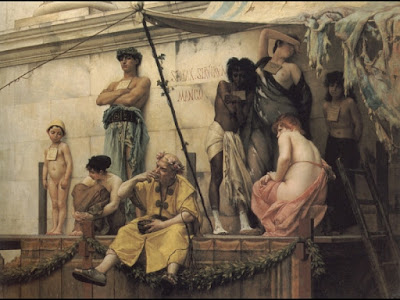
Gustave Boulanger's painting The Slave Market; source: Wikipedia


I’m sure, almost everyone could hear this song at least once in their life. Although many know that, not everyone is aware of its origin. Here you can hear one of the most popular this song ‘s rendition connected with the Great Britain culture in which the song is usually associated.

Amazing grace played at Wells Bridge Fire Department Pavillion on June 3, 2006, by "Rocks From The Garden", 
Joannie (vocal) and Randy(guitar).

What are the origins of "Amazing Grace"?

"Amazing Grace" is surely one of the most recognizable hymns in the English-speaking world. The words were written in 1772 by the Englishman John Newton and published anonymously  in 1779 as a part of a poem entitled "Olney Hymns". After almost a century, in 1847, Newton's rhyme was set to the "New Britain" tune and given the title "Amazing Grace". In that shape the song appeared for the first time in Walker's tunebook "Southern Harmony" in 1847.

Albert Finney as John Newton, the photo from the movie “Amazing Grace”

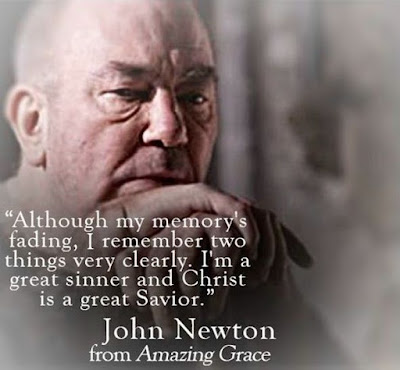
John Newton was working as a slave ship master bringing the slaves from Africa to England. After one of his sea voyages his ship almost sank and he survived miraculously. Newton realised his salvage was only by God’s grace and decided to turn his life around and became a clergyman and poet. “Amazing Grace” was written from his personal experiences with words which were borne from his heart.


Engraving of the vicarage at Olney where John Newton spent his first years as a minister, 1879.  Source: Martin, Bernard (1950), John Newton: A Biography, William Heineman, Ltd., illustration between pages 222 and 223.
Engraving of the vicarage at Olney where John Newton spent his first years as a minister, 1879.

Why is "Amazing Grace" known as the anti-slavery hymn?

After several years of working in a British parish John Newton started to gain popularity as a well-educated preacher, a poet and writer. It started when he became the spiritual father of William Wilberforce when he was a boy and in the forthcoming years was reaching gradually more and more influence on the young politician and philanthropist. Talking about his slave trader work in the past he emphasized that he still couldn’t find peace because of his memories of suffering slaves which were still fresh.

William Wilberforce (1759 – 1833) , source: Wikipedia.


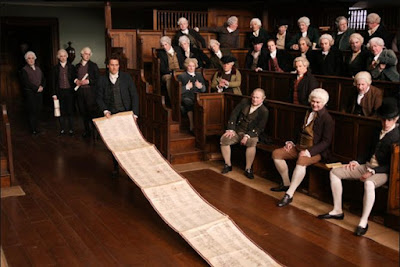
To make a greater impression on his young ward he repeated that all the time during his work as a preacher, he was living in the company of 20 thousand ghosts of black slaves who died of diseases and hunger during the shipping when he was a captain and a slave master. Thereby, one day he happened to be just that person, who had a great impact on William Wilberforce; leader or the parliamentary campaign to abolish the African slave trade (Black Slavery).

Ioan Gruffudd as William Wilberforce – a photo from the movie “Amazing Grace” (2006)

The popularity of the song.

The project succeeded after many years of making endeavours. William Wilberforce and his companions, one of whom was John Newton, ultimately met the target thanks to having collected evidences of the cruelty of slave traders who treated Africans as if they were animals, and also thanks to emphasized high rate of death among the black people transported on ships and their endless torments during their lives in slavery in Europe.  After long years of fighting, the "Slave Trade Act" was ultimately signed in 1807 and from that time onward the song "Amazing Grace" has been associated with the idea of resistance to every kind of slavery. The movie "Amazing Grace" (2006) made this connotation even more obvious.

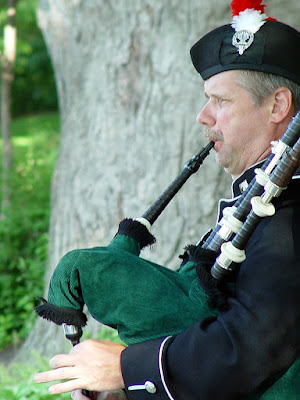
Amazing Grace Bagpipes


Was Africa free after the slave trade abolishment in Great Britain?

After abolishing the slavery in Great Britain, other countries started to change their policies step by step to change the law and stop the slave trade. But the dealings were still valid in America’s law due to the fact that having the unpaid workers was a guarantee of good prosperity, especially that in the eyes of the law they had no more rights than animals. Slaves could be sold anytime, severely punished for every disobedience and could be used for sexual pleasures or even killed during penalizing. They never could decide for themselves, love, personal ambitions and dreams were forbidden. Even after they got married they couldn’t be sure that their children would live with them, because they could be sold anytime. The times have changed now – there’s no slavery in the world and all the black people are now said to be free and have the same rights as the whites. Everyone seems to be equal and enjoy the same human rights, but is that really so?
Why is racism still a real problem? George Flloyd’s death has reminded us about the necessity to fight any injustice towards people of different skin colour, place of living, religion and culture.

Josiah Wedgwood, The Official Medallion of the British Anti-Slavery Society, 1787


      Is Africa free now?

Did Great Britain lost their benefits after the slave trade abolishment? I don’t think so… When the Slave Trade Act was about to be claimed as invalid the Great Britain was already an owner of large territories in Africa like Sierra Leone, Gambia and later the Kingdom of Lagos and the Northern and Southern Nigeria. By the coming years Great Britain was buying more and more areas in Africa and in the end became the biggest colonialist growing rich due to the petroleum fields which were found in Africa. In the 20th century the colonies got independence but Great Britain maintained the influence they had on the Africa governments to be able to reap the further rewards from the oil. One of the largest crude oil sources was discovered in Niger delta of the Federal Republic of Nigeria; Olubiri in Bayelsa state which in fact induced Great Britain's political decisions about their involvement in Nigeria's economy. Protecting their oil interests was also a reason, why Great Britain supported the Federal Government of Nigeria and supplied them with weapons during the Nigeria civil war against Biafra between 1967-1970.

Coat of Arms of the Republic of Biafra

       The acceptance of secession would be a great risk of losing profits from the oil trade, which could be a very big danger for British economy. Of course in the wake of European support Biafra fell and returned to Nigeria, so the UK and now the USA can still benefit a lot from the oil exploitation while Nigerians have little or no profit from the oil extractions and struggle with poverty and hunger. This hasn’t changed for centuries. 
It begs the question: Are the African people really free now? Is really the “Amazing Grace” the anti-slavery song or only a mocker which has kept quiet people’s conscience?

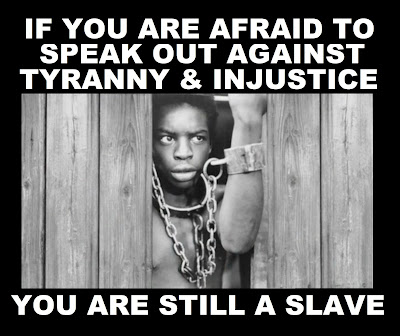
LeVar Burton as Kunta Kinte. The picture from the TV series “Roots” (1977)


Through many dangers, toils and snares 
We have already come 
T'was Grace that brought us safe thus far 
And Grace will lead us home 

Amazing Grace, how sweet the sound 
That saved a wretch like me 
I once was lost but now am found 
Was blind but now I see 

(John Newton, 1772)

Written by: Cecylia Buczko
LeVar Burton as Kunta Kinte. The picture from the TV series “Roots” (1977)
Cecylia Buczko

czwartek, 7 maja 2020

ABUJA LOCKDOWN: A LIVING HELL

We have little or no electricity supply here, no running water in the houses; we don't have money to buy food any more... Read more


The street market in Abuja, "library news broadcast", Abuja lockdown: a living hell, Light Obi-Ogbonnia, Light Obi Ogbonnia, Ligh Obi Ogbonnia, Nigeria, Cecylia  Buczko
The street market in Abuja

There's the first version of the article which I wrote in English while talking with my interviewee. The Polish translation has been published HERE. The photos I sent to the wpolityce.pl  have been marked with the note about denial of responsibility.

GMT-8:00

If you want to share the article on Facebook, click HERE  


 We have little or no electricity supply here, no running water in the houses; we don't have money to buy food any more. Many people are already starving. More and more gangs are looting houses. People are hungry and at the same time scared of being robbed of the little food in the homes -


– that’s what Light Obi-Ogbonnia told me about his experiences during the coronavirus lockdown.


Mr Light Obi-Ogbonnia is a businessman who lives and works in Abuja (approximately 4 million citizens), the capital city of Nigeria, which is the most populated African country (approx. 200 million people).


The street market in Abuja, "library news broadcast", Abuja lockdown: a living hell, Light Obi-Ogbonnia, Light Obi Ogbonnia, Ligh Obi Ogbonnia, Nigeria, Cecylia  Buczko
Mr Light Obi-Ogbonnia

Cecylia Buczko: Tell me about the lockdown in Abuja.


Light Obi Ogbonnia: - The lockdown officially started on the 30th March 2020. The schools, kindergartens, churches and mosques were all closed. All forms of transport were banned. The streets which were usually crowded and noisy are now empty. The police are making regular enquiries as to why someone has left their home after all. All shops are now closed but street markets are open on Wednesdays and Saturdays. Actually, any social distance doesn't exist on these days. It seems like we had have five days of total lockdown and two days off. Every Wednesday and Saturday the markets are extremely busy and crowded – this is the only opportunity people have to buy food and groceries. The police try to maintain law and order, but sometimes there’s conflict with angry people who are desperate due to being hungry and thirsty.


The street market in Abuja, "library news broadcast", Abuja lockdown: a living hell, Light Obi-Ogbonnia, Light Obi Ogbonnia, Ligh Obi Ogbonnia, Nigeria, Cecylia  Buczko
The street market in Abuja


How then do people commute to work?

- Unfortunately, no one here is now working except people who are employed in essential services, e.g. health workers, police, utility workers etc. Sometimes thy will have to walk for several hours on foot to their place of work due to being no public transport these days. The majority of people including myself have to sit at home knowing that we will not get paid during this pandemic. Suddenly we have all lost our jobs. We don't get any paid from the government. Try to imagine that... your savings are running out and some people are already starving as they had no savings. If the pandemic doesn't kill them, hunger will


It's also difficult for us. Many companies have gone bankrupt and a lot of people have lost their jobs.


- Recently I was in Warsaw and I fell in love with Poland, you are a modern country. Many of you can work from home (online). Unfortunately it’s not possible here in Nigeria. The information technology level is very low, with limited internet access. We just stay home throughout the day doing nothing. Our children suffer the most. They can’t understand why daddy and mommy suddenly stopped going to work, why the schools are shut, why they can’t go out and meet friends and why there’s no electricity to watch TV.


The street market in Abuja, "library news broadcast", Abuja lockdown: a living hell, Light Obi-Ogbonnia, Light Obi Ogbonnia, Ligh Obi Ogbonnia, Nigeria, Cecylia  Buczko
The street market in Abuja


Polish children learn online from homes. To tell you the truth, they dream of holidays because such learning system is difficult. What do Nigerian children long for?

- Sometimes Nigerian children would love to watch TV, but they are happy if there’s something to eat for dinner and some water to drink. But that’s not always possbile. We have little or no electricity supply here, no running water in the houses; we don't have money to buy food any more. Many people are already starving. More and more gangs are looting houses. People are hungry and at the same time scared of being robbed of the little food in the homes.


What about the healthcare?


- The real tragedy is when people get sick - many of them die of negligence, some can’t even be taken to hospital because there’s no public ambulances. Unlike in Poland and other developed countries where you can call the ambulance for emergency. Sick people in Nigeria are conveyed to hospital by using public transport, but it is not working at the moment. There has never been any ambulance service for the public – can you imagine that? You can use your private car, if you can afford to have one. But it is still very difficult because of the movement restrictions. So, those who manage to get to hospital often get there too late. Doctors and nurses are now afraid to attend to their patients for the fear of coronavirus…


The street market in Abuja, "library news broadcast", Abuja lockdown: a living hell, Light Obi-Ogbonnia, Light Obi Ogbonnia, Ligh Obi Ogbonnia, Nigeria, Cecylia  Buczko
The street market in Abuja


How do people cope with such difficult situations?

- Imagine living without electricity in a very hot country where the temperature is about 39`C… It’s hell. I know you can’t even imagine this. No food, no water and no electricity. The few privileged people have electricity generators, so they can charge their devices and sometimes let the kids watch the television, but only for those who can afford to buy the fuel for the generator. Unfortunately, most people have been cut off from the world - they live without any communication with the outside world because of no electricity and no internet. Sometimes people are covering their windows to stop sunlight shining into their homes. How long can people sit in this twilight.


Why don’t you have any electricity now? Is this a temporary situation?


- To add to the hardship, the few hours of electricity supply we received (sometimes 2-3 hours in a day) was recently cut off by the government. This made time unbearable during the lockdown. The power company went from house to house disconnecting and cutting off the electric cables running into our homes – we have it mounted on the facades of the buildings. They physically cut the cables so that they cannot be reconnected.


Why has such an authorative solution been chosen?


- People are classified into two groups here, the very rich citizens, of course they are equally the most corrupt and mostly of the political class, and the common masses. Those who are the most corrupt and powerful do enjoy an extremely high standard of living. They have electricity while the rest stay in total darkness. Moreover, the government has assumed that the citizens can't afford to have any electricity now. How would people pay their energy bills when they don't have any job and have no source of making any income now? They have spent their last savings on food and water.


The street market in Abuja, "library news broadcast", Abuja lockdown: a living hell, Light Obi-Ogbonnia, Light Obi Ogbonnia, Ligh Obi Ogbonnia, Nigeria, Cecylia  Buczko
The water reservoir


Why don’t you have any water now? Mind you, during a pandemic there is a need for constant washing your hands.

- The government had never laid any water pipes in this area of Abuja. Individuals have dug boreholes in their compounds or you must buy water in kegs at exorbitant prices. However, now it is so difficult to buy water. That’s why I am worried about the peoples’ level of hygiene at this time of coronavirus. Poor hygiene increases the spread of the virus. Do you think they will wash their hands if they have no water to drink? How long will the lockdown last? People are already desperate and anxious to return to the streets again. They are simply afraid that they will die from either Covid-19 or hunger.


Surely there are some social allowances for people.


- No! There is no single social support from the government here in Abuja. We’ve only heard that the government is providing social support to people, but we have never seen one beneficiary, none. A few weeks ago we heard about “the rain of bread” in Lagos State - where bread was falling from the sky in the streets of Lagos (making joke of the ridiculous social support the government gave to Lagos residents), a loaf of bread to be shared among four houses. However, as you would expect, it only has made people feel more and more bitter.


The street market in Abuja, "library news broadcast", Abuja lockdown: a living hell, Light Obi-Ogbonnia, Light Obi Ogbonnia, Ligh Obi Ogbonnia, Nigeria, Cecylia  Buczko
The street market in Abuja


It’s so easy to crack now in the face of the lockdown in Nigeria.


- Yes. We would rather take the risk of getting Covid-19 than die from starvation and deydration. But we will not give up so quickly. We are tough people.


The first confirmed coronavirus case was announced on February the 27th 2020 in Lagos, when an Italian citizen was tested positive for the virus. Currently, the virus is very active here despite living in a very hot climate, theoretically it shouldn’t be so contagious. Until May the 6th 2020, 2950 cases have been conformed in Nigeria, of which 93 people have died and 419 have recovered.


The street market in Abuja, "library news broadcast", Abuja lockdown: a living hell, Light Obi-Ogbonnia, Light Obi Ogbonnia, Ligh Obi Ogbonnia, Nigeria, Cecylia  Buczko
The street market in Abuja


If you want to share the article on Facebook, click HERE

Written by: Cecylia Buczko

The street market in Abuja, "library news broadcast", Abuja lockdown: a living hell, Light Obi-Ogbonnia, Light Obi Ogbonnia, Ligh Obi Ogbonnia, Nigeria, Cecylia  Buczko
Cecylia Buczko


The Polish version of the interview has been published here:
WYWIAD. Relacja prosto z Nigerii! Afrykański biznesmen o tragicznej sytuacji w Abudży: "Wielu od pewnego czasu przymiera głodem"

wtorek, 5 maja 2020

WYWIAD. Relacja prosto z Nigerii! Afrykański biznesmen o tragicznej sytuacji w Abudży: "Wielu od pewnego czasu przymiera głodem"

Light Obi-Ogbonnia, Light Obi Ogbonnia, Abudża, kwarantanna w Abudży, lockdown in Abuja, Nigeria
Targ uliczny w Abudży


Zapraszam do lektury mojego artykułu:


WYWIAD. Relacja prosto z Nigerii! Afrykański biznesmen o tragicznej sytuacji w Abudży: "Wielu od pewnego czasu przymiera głodem"


Artykuł powstał w wyniku wielogodzinnych rozmów na video czacie, które przeprowadziłam z afrykańskim biznesmenem, panem Light Obi-Ogbonnia. W swojej relacji opowiedział mi o tym, jak wygląda sytuacja mieszkańców Nigerii podczas kwarantanny.

Wywiad został opublikowany na łamach portalu: wpolityce.pl


Pełna treść wywiadu znajduje się tutaj:

WYWIAD. Relacja prosto z Nigerii! Afrykański biznesmen o tragicznej sytuacji w Abudży: "Wielu od pewnego czasu przymiera głodem"

Autor: Cecylia Buczko

Zdjęcie użytkownika Cecylia Buczko.
Cecylia Buczko